
We provide specialized studies and analysis using industry-standard tools.
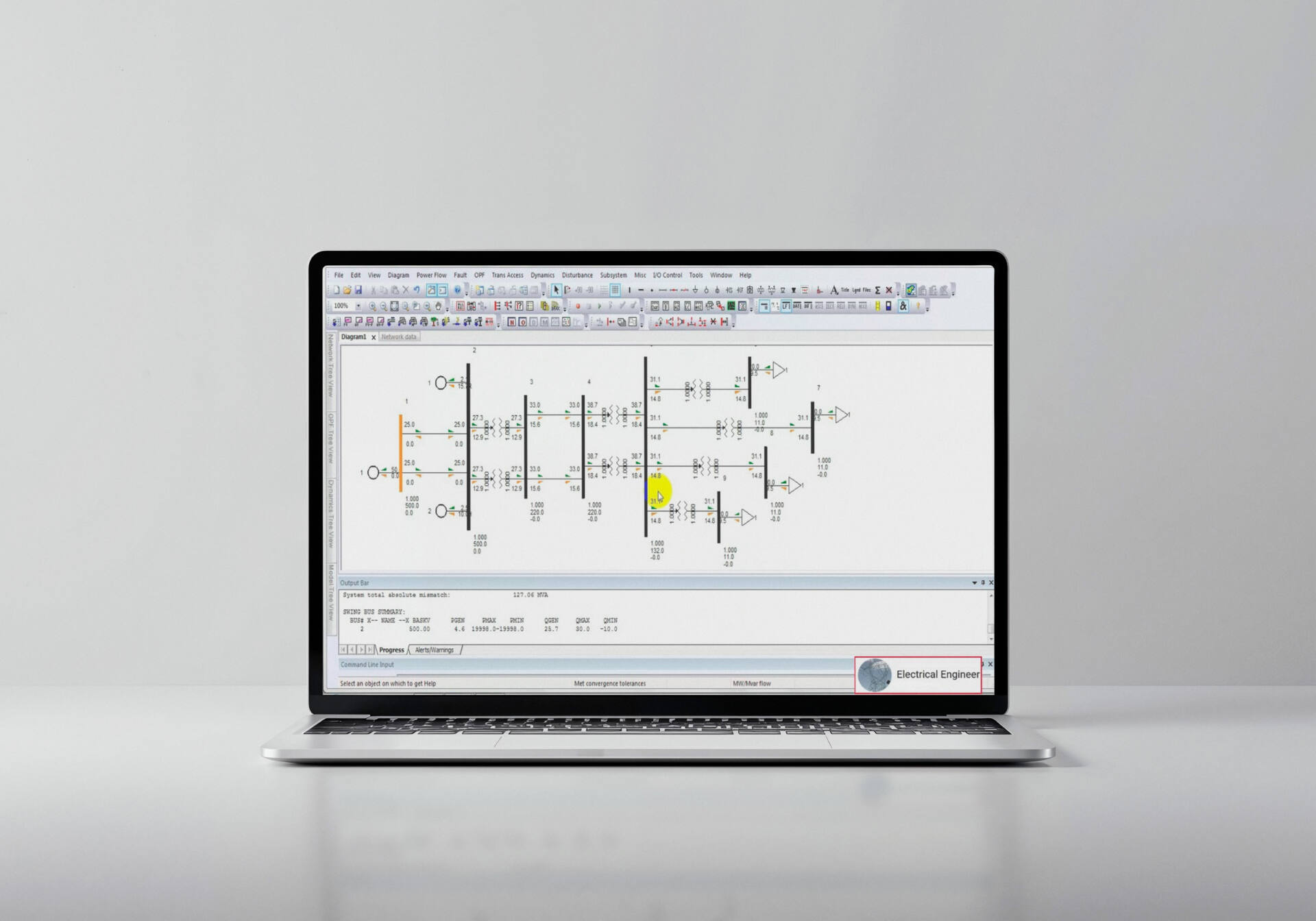
Discover the world’s most advanced power systems EMT simulation software!
With PSCAD (Power System Computer Aided Design ) you can build, simulate, and model your systems with ease, providing limitless possibilities in power system simulation. The EMTCD (Electromagnetic Transient including DC) is the numerical simulation engine that resolves complex mathematics equations involved in the simulations.
Traditionally, an EMT-type program has been used to study very high-frequency, fast, short-duration transients. Currently, with the integration of renewable energy into the grid, EMP-type programs play a critical role in the design and modeling of IBRs (Inverter-based resources). Therefore, EMT simulations are readily applicable to the design and integration of HVDC (High-Voltage DC), FACTS (Flexible AC Transmission System), and other power electronics-based power system devices.
For better understanding the software, we will quickly dive into the importance of EMT programs e in HVDC and other Power Electronic based Systems and well see common applications.
Essential for protection, insulation, and renewable fault studies.
Including insulation coordination study and power quality analysis.
Our services prioritize precision and safety in every project. With a focus on quality workmanship and customer satisfaction, we ensure your electrical systems are efficient, reliable, and built to last.

Engineering consulting and training services for reliable and efficient power systems. Contact us to learn more.
Copyright © 2026 Advanced Studies in Engineering. All Rights Reserved. Crafted by Mave.